
Announcements
Announcements
Event on 26 April in York / This hybrid panel discussion features two SEI experts; AI's role in the media, climate research and its ethical tensions are all up for debate.
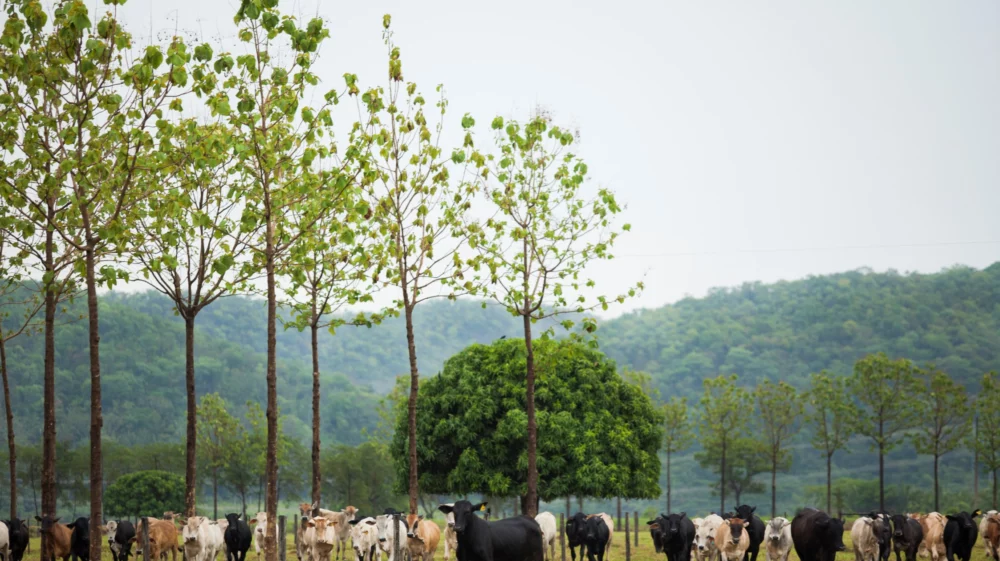
Event on 25 April in Stockholm / Discover the potential of agroforestry in Ukraine's post-war recovery with SIANI and experts, including SEI's Matthew Fielding.
We are an international non-profit research and policy organization that tackles environment and development challenges.
SEI has seven centres in the UK, the US, Thailand, Kenya, Estonia and Colombia. Our headquarters is in Sweden.
We promote our research to journalists and media to inform policy and decision-making. We also welcome inquiries on topics in which we have expertise.
Use our tools to predict better results and conduct effective planning.
Journal article / This study applies the ‘Brussels Effect’ theory to identify key factors facilitating and hindering policy convergence between the EU and China.
Journal article / This paper presents survey findings, revealing key factors shaping transport choices and offering policy insights for sustainable infrastructure development.
SEI brief / Get a summary of a UNEP foresight workshop, focused on future scenarios for the environment and human development in the Asia-Pacific region up to 2050.
Journal article / Researchers from our York and Asia centres contributed to the first national and provincial air pollutant emissions inventory for Lao PDR.
Explore the Currents 2024 perspective series and gain insights from our panel event, where experts discussed the key sustainability trends set to shape the year ahead.
Feature / Explore perspectives by our researchers on the trends and topics set to shape 2024.
Perspective / How will will the prospect of reaching and breaching the Paris Agreement's 1.5°C target influence actions to contain global warming?
Perspective / Unprecedented pressure on the planet’s finite resources fuels a new race for space of all kinds. How will we manage the trade-offs and resulting conflicts?
Perspective / At this time of growing geopolitical fragmentation and conflict, how can the world foster the multilateral cooperation needed to address global problems?
Other publication / The Climate Solutions Accelerator of the Genesee-Finger Lakes Region and SEI US have been assessing the region's climate footprint and generating solutions.
Other publication / The U.S. brief of the Lancet Countdown report gives recommendations on how the country can support public health through climate action.
Other publication / Understanding mechanisms that lead to differential impacts of mining on local marginalised social groups is crucial in minimizing such impacts.
Vacancy / Lead change in climate adaptation finance as a Programme Manager for SEI Asia's multi-stakeholder action labs in Bangkok.
Vacancy / SEI HQ is recruiting a Grants and Funding Manager to play an integral part in our fundraising efforts.
Vacancy / Join SEI as a Research Fellow in Stockholm to advance sustainable ocean governance and policy impact.
Vacancy / Join SEI Asia as a Project Finance Officer, managing financial aspects of projects with a team driving sustainable development.
Internship / Join SEI Asia as an intern, gain skills in digital and content communications, and help drive sustainable development in a dynamic, multicultural environment.
Internship / Join SEI Tallinn for an internship and engage in data analysis, stakeholder interaction and tool development for sustainable energy.
Internship / Explore policy coherence in EU climate initiatives through this SEI HQ internship.
Internship / Contribute to transformative projects as a communications intern, enhancing visibility of water, health and environmental research.
Internship / Help assess Swedish law's impact on Indigenous rights and resource governance.
Internship / Join SEI as an intern to coordinate events that drive real policy and practice changes.
Vacancy / SEI Latin America seeks a consultant to lead in occupational health and safety, ensuring sustainable practices and workplace well-being.
Design and development by Soapbox.